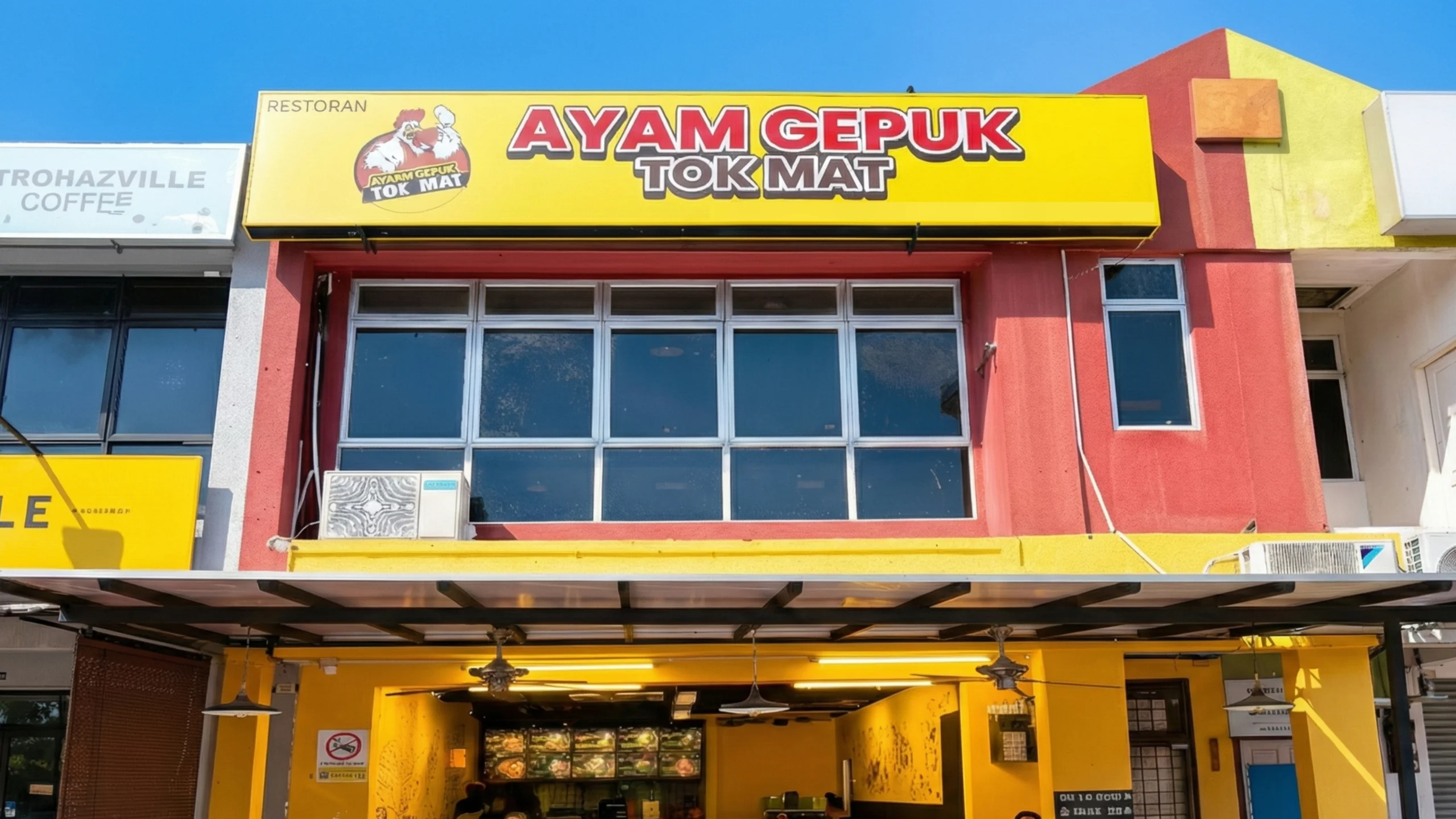
How Ayam Gepuk Tok Mat Improved Peak Hour Speed & Order Accuracy with FeedMe POS
Running an F&B business in Malaysia is already challenging — but once you grow into a chain store, your challenges multiply fast.
When you have multiple outlets, high daily orders, and peak hour rush, your POS system becomes more than just a “cashier app”.
It becomes the system that controls:
✅ order flow
✅ staff efficiency
✅ customer waiting time
✅ sales tracking
✅ outlet performance comparison
✅ and your ability to expand smoothly
In this case study, we will share how Ayam Gepuk Tok Mat (AGTM) chose to switch from their previous POS system to FeedMe POS, and how the right POS partner (Mipos) can make chain store scaling much easier.

About Ayam Gepuk Tok Mat: A Fast-Growing F&B Chain
Ayam Gepuk Tok Mat is a growing Malaysian F&B brand with various branches.
Some outlets even receives more than 1,000 orders in a single day.
For any restaurant owner, you already know what that means:
Lunch hour rush becomes intense
staff need to move fast
the kitchen must receive orders correctly
cashier must avoid mistakes
customer queue must be managed properly
When order volume hits this level, your POS system must operate like a stable engine, not a “sometimes okay” tool.
Because one small system delay can quickly turn into:
❌ wrong orders
❌ kitchen confusion
❌ customer complaints
❌ staff panic
❌ revenue loss

The Real Problem AGTM Faced: Lagging POS During Peak Hour
Before switching to FeedMe POS, AGTM was using another pos system.
Their biggest issue was clear:
✅ The POS system frequently lagged during operation
And this caused serious operational problems:
missing orders
duplicate orders
order flow became unreliable
staff had to double-check everything manually
operations became chaotic, especially during peak hours
For a high-volume outlet, even a 5–10 seconds delay can be very costly.
Because during peak hour, orders are coming in continuously, and staff are already operating at their maximum capacity.
A POS lag is not “just annoying” — it’s dangerous.

Why This Is a Big Deal for Chain Stores
If you only have 1 small stall, some issues can still be tolerated.
But once you are running multiple outlets, the risks become bigger:
Chain store challenges include:
✅ Standardising operations across outlets
✅ Faster staff onboarding
✅ Clear reporting for outlet comparison
✅ Central control for menu + pricing
✅ Consistent customer experience everywhere
When one outlet faces POS lag, it affects:
sales performance
customer satisfaction
brand reputation
staff morale
When more outlets are added, these problems multiply.
AGTM already gave feedback to previous pos system provider regarding the issues, but:
✅ The issues did not get resolved even after a long time
That is why AGTM started looking for a POS system that can support their expansion seriously.

AGTM’s Growth Plan: Expand More Branches + Licensing / JV Partners
AGTM is not slowing down — they plan to:
✅ continue opening new branches in the near future
✅ expand even further through licensing / JV partner model
This type of expansion is ambitious and powerful — but it requires a stable system.
Because when you scale via JV or licensing, your biggest risk is:
“Can every outlet run consistently, even with different operators?”
To scale an “empayar” (empire), AGTM needed a stronger technology partner, not just a basic POS.
That’s where FeedMe POS becomes the next step.

What AGTM Needed in Their New POS System
When a chain operator changes POS, it’s usually not about “nice UI” or “cheap price”.
It’s about results.
Here are the main things AGTM needed:
✅ 1) Smooth peak hour operation (no lag)
Because at 1,000+ daily orders, the system must be stable all the time.
✅ 2) Accurate order flow (no missing / duplicate orders)
Order mistakes are expensive:
waste food
increase waiting time
cause customer anger
stress staff
✅ 3) Reliability + long-term support
A POS system is not a one-time purchase.
It is a long-term operational partner.
✅ 4) Scalability for new branches
A chain needs a system that can grow together:
replicate setup easily
onboard staff fast
standardise menu and workflow
Why FeedMe POS? (More Than Just a POS System)

FeedMe POS is built with a clear mission:
✅ to help F&B owners grow and scale — from small stalls, kiosks, food courts, all the way to mature chain stores.
What makes FeedMe different is how it positions itself:
FeedMe is an F&B-focused ecosystem, not only a cashier POS
It offers a unified platform that can include modules such as:
POS system
inventory
reporting
mini-program
HR
AI features
This matters because chain stores usually need more than just “cashier function”.
They need a system that supports:
✅ standardization
✅ management visibility
✅ operational automation
✅ scaling without chaos
FeedMe also highlights a key promise:
Operational automation to reduce manual work and streamline restaurant tasks.
This directly matches what AGTM needed.

The Solution: FeedMe POS as AGTM’s Technology Partner for Expansion
AGTM selected FeedMe POS to become their POS system partner in expanding the AGTM business empire.
The goal is clear:
✅ stable day-to-day operations
✅ smoother peak hour performance
✅ better readiness for scaling new outlets
✅ a system that can support chain growth
For chain stores, the POS system must function like the “central nervous system”:
receives orders correctly
sends to kitchen smoothly
keeps reporting consistent
supports faster decision-making
Implementation & Support: Why the POS Partner Matters
Even the best POS system can fail if:
setup is messy
staff are not trained properly
support is slow
outlet configuration is inconsistent
This is why the POS partner matters a lot, especially for chain businesses.
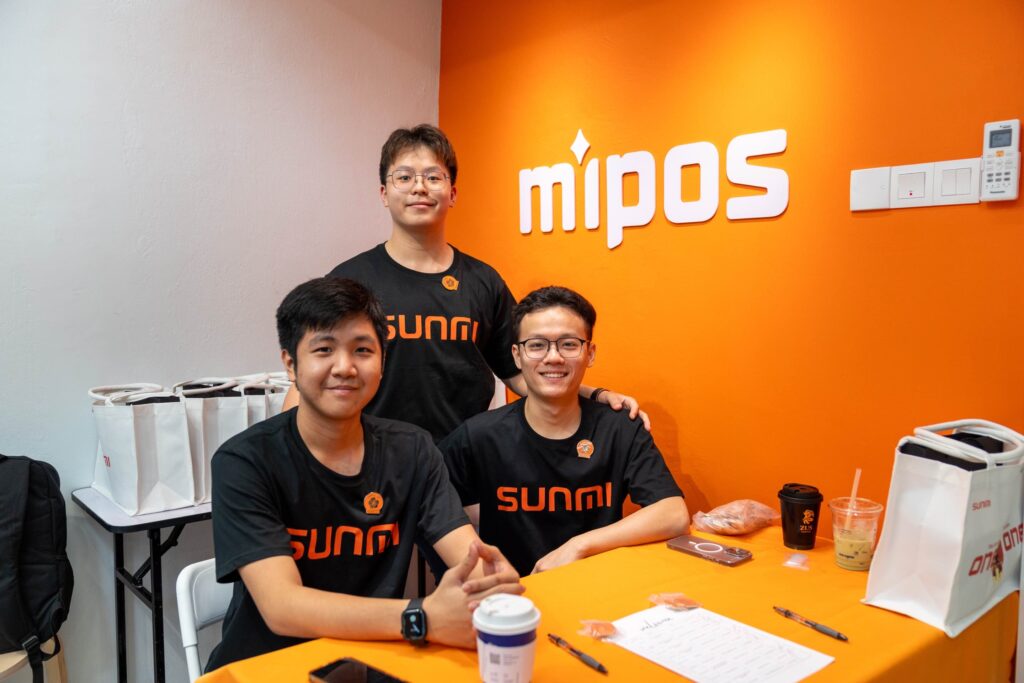
Mipos is an experienced partner for FeedMe POS deployment in Malaysia
Mipos is highly experienced in chain store implementation, including:
✅ POS terminals configuration
✅ software setup
✅ staff training
✅ central reporting support across outlets
✅ professional after-sales technical service
For chain store owners, this means:
faster deployment
smoother go-live
less mistakes during migration
higher chance of success long term
What a Professional POS Deployment Should Include
If you are running multiple outlets, a proper deployment should not be “install and go”.
It should be structured.
Here’s what Mipos typically focuses on during chain store deployment:
A) Outlet Workflow Setup
dine-in / takeaway / delivery workflow
cashier shortcut buttons (fast ordering)
add-on items and set meals configuration
discount / promo structure
B) Staff Roles & Control
cashier access vs manager access
void / refund permission settings
control points to reduce mistakes or abuse
C) Training That Matches Real Peak Hour
training staff under realistic busy scenarios
teaching staff recovery process (what to do if order issue happens)
closing day procedure training
D) Reporting & Outlet Visibility
For chain owners, reporting is not optional.
A proper POS system must help you see:
daily sales per outlet
top-selling items
peak hour performance
outlet-to-outlet comparison

Results & Expected Improvements
AGTM changed POS because the previous system caused chaos.
So the improvements are very practical and business-critical.
✅ 1) More stable operation during peak hours
With high volume outlets, stability is the foundation.
If the POS lags → order chaos happens again.
So the key outcome is smooth ordering flow even when the store is extremely busy.
✅ 2) Reduced missing and duplicate orders
When orders are correctly captured and routed:
kitchen receives correct sequence
staff don’t need to “double confirm manually”
fewer customer complaints
smoother service
✅ 3) Better readiness for scaling new outlets
When a system is stable and standardised, new branches can grow faster.
For example:
easier to replicate menu setup
smoother staff onboarding
fewer operational surprises during new outlet opening
For a brand like AGTM, this is critical because expansion is already part of their strategy.
Key Lessons for Malaysian F&B Owners (If You’re Expanding)
If you are growing from 1 outlet → 2 outlets → 5 outlets, the biggest mistake is:
“Using a POS system that cannot handle real peak conditions”
For chain owners, your POS must be:
✅ reliable under pressure
✅ supported by a professional team
✅ built for multi-outlet expansion
✅ able to standardise workflow and reporting
Because once you are operating multiple outlets:
problems become more expensive
mistakes affect your brand, not just one store
management control becomes harder
expansion becomes slower

Is FeedMe POS Suitable for Your Business?
FeedMe POS is highly suitable for:
✅ fast-moving restaurants (high daily orders)
✅ growing outlet chains
✅ brands with plans to expand branches
✅ F&B owners who want smoother operations and better control
Especially if you’ve experienced issues like:
POS lag during rush hour
missing orders
duplicate orders
inconsistent outlet reporting
difficulty training new cashier staff
Then it might be time to upgrade your operational foundation.
Want to Explore FeedMe POS for Your Chain Store?
If you’re a Malaysian F&B owner planning to expand, the best time to upgrade your POS system is:
✅ before the chaos becomes bigger
✅ before you open more outlets
✅ before your team gets burned out during peak hours
Mipos POS team can help you:
evaluate your current workflow
recommend the right FeedMe setup
handle full installation and configuration
train your staff properly
support your outlets long term
📩 If you want to know whether FeedMe POS is suitable for your restaurant or chain store, you can reach out to Mipos POS team to learn more.

Bonus Checklist For Owners Who Want to Compare POS System
Here’s a quick checklist you can use when evaluating any POS system:
✅ Does it lag during peak hour?
✅ Can it handle high order volume smoothly?
✅ Can it avoid missing and duplicate orders?
✅ Is staff training easy and fast?
✅ Can it scale to multiple outlets?
✅ Does it provide clear reporting for each outlet?
✅ How is their after-sales technical support?
✅ Can it standardise menu and promo across branches?
If many answers are “no”, it’s a signal that upgrading your POS system may be the next step.

Want more like this?
Browse all our guides on POS systems, Sunmi devices, restaurant strategy, and shop tech in Malaysia.